

Understanding Wedge Bounce and Grind: Your Guide to Better Short Game Shots
Ever stood over a tricky greenside shot, the ball nestled down in the rough, and felt a wave of uncertainty wash over you? Chances are, the problem wasn't just your technique, but also a lack of understanding about your wedge. Specifically, wedge bounce and grind – two critical factors that determine how your club interacts with the turf and ultimately, the success of your shot. Mastering these concepts can transform your short game from a source of anxiety to a weapon of precision.
What is Wedge Bounce?
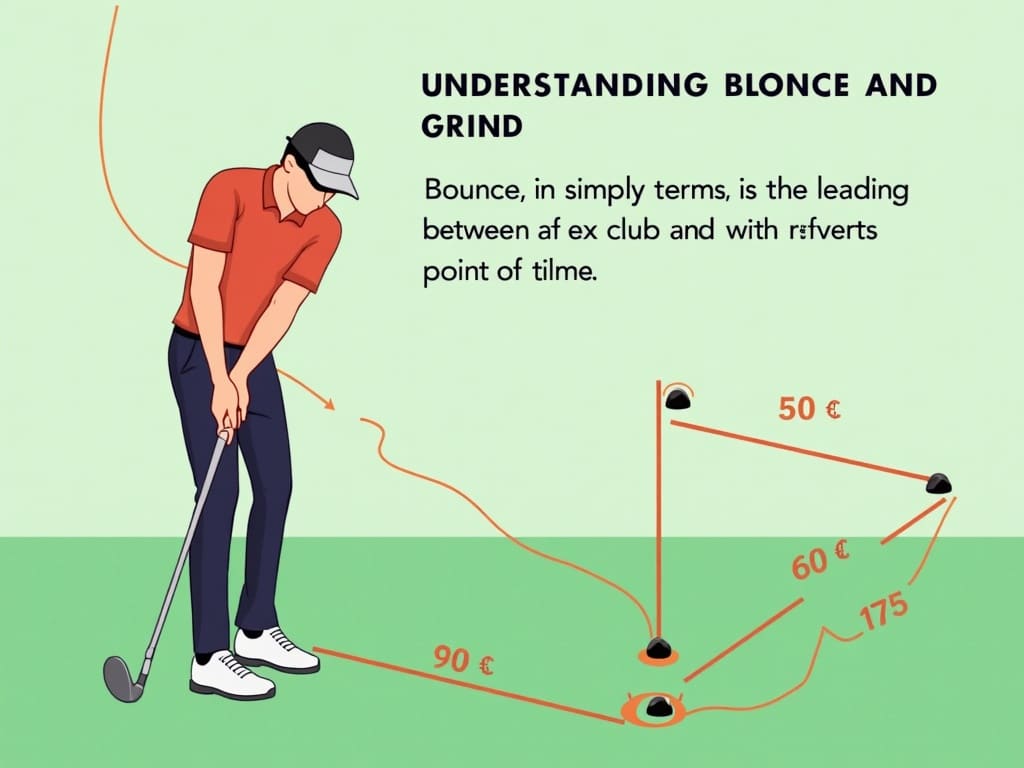
Bounce, in simple terms, is the angle between the leading edge of the club and the lowest point of the sole (the part that sits on the ground). Imagine placing your wedge on a flat surface. Notice how the leading edge doesn’t sit flush with the ground? That upward angle is the bounce. It's designed to prevent the leading edge from digging too deeply into the turf, sand, or rough, allowing the club to bounce through the impact zone.
Bounce is measured in degrees, typically ranging from 4 to 14 degrees. A higher bounce angle means the leading edge is further off the ground, making it more forgiving on softer surfaces. A lower bounce angle keeps the leading edge closer to the ground, ideal for tight lies and firm conditions.
Why is Bounce Important?
Choosing the right bounce is crucial for several reasons:
- Turf Interaction: The correct bounce angle ensures the club glides through the turf instead of digging, promoting cleaner contact and consistent distances.
- Versatility: Different bounce options cater to various lies and shot types. A higher bounce wedge can handle fluffy lies and bunker shots, while a lower bounce wedge excels on tight lies and delicate chips.
- Confidence: Understanding your bounce allows you to approach each shot with more certainty, knowing your wedge is properly equipped for the task.
Understanding Wedge Grind
While bounce dictates how the wedge interacts with the ground, grind refers to the shaping and contouring of the sole. Grinds are designed to enhance versatility by modifying the club's behavior in different situations. By removing material from specific areas of the sole, manufacturers create wedges that perform optimally for various swing styles and course conditions.
Think of grind as the fine-tuning of bounce. It allows you to customize your wedges even further to match your specific needs and preferences. There are numerous grind options available, each with its own unique characteristics.
Common Wedge Grind Options
Here's a look at some common wedge grinds and their ideal applications:
- Standard Grind: Often found on full-sole wedges, a standard grind offers a traditional feel and is suitable for players who prefer to keep the clubface square. It's a good all-around option for various conditions.
- Heel and Toe Relief Grind: This grind removes material from the heel and toe sections of the sole, allowing the clubface to be opened or closed more easily. It's popular among players who like to manipulate the face angle for different shots.
- C-Grind: Similar to heel and toe relief, the C-grind also removes material from the trailing edge of the sole, enhancing versatility around the greens. It's a favorite among skilled players who like to get creative with their shots.
- M-Grind: Designed for versatility and precision, the M-grind features a crescent-shaped sole that allows for consistent contact on various lies. It's ideal for players who like to play a variety of shots around the green.
- S-Grind: This grind is designed for softer conditions and sand play. It features a wider sole with a slight curve from heel to toe, preventing the club from digging too deeply.
How to Choose the Right Bounce and Grind
Selecting the right bounce and grind for your wedges can seem daunting, but here’s a step-by-step guide to simplify the process:
- Assess Your Course Conditions: Do you typically play on firm, tightly mown fairways, or softer, lusher courses? If you play on firm courses, a lower bounce wedge will likely perform better. If you play on softer courses, a higher bounce wedge is generally recommended.
- Consider Your Swing Style: Do you tend to take a shallow divot or a deep divot? Players with steeper swing paths often benefit from higher bounce wedges, while players with shallower swings may prefer lower bounce options.
- Evaluate Your Shot Preferences: Do you like to open the clubface and hit flop shots, or do you prefer to keep the face square and play more traditional chips and pitches? Players who enjoy manipulating the clubface should consider wedges with heel and toe relief.
- Get Fitted by a Professional: The best way to determine the ideal bounce and grind for your wedges is to consult with a qualified club fitter. They can analyze your swing and playing conditions to recommend the best options for your game, consider getting fitted.
Matching Bounce and Grind to Different Shot Types
Different bounce and grind combinations excel in various situations. Here’s a breakdown of some common shot types and the recommended wedge configurations:
- Flop Shots: Higher bounce wedges with heel and toe relief or C-grinds are ideal for flop shots. The higher bounce prevents the leading edge from digging, while the relief allows you to open the face without grounding the heel.
- Bunker Shots: High bounce wedges with wider soles (like an S-grind) are essential for bunker play. The bounce helps the club glide through the sand, producing consistent explosions.
- Tight Lies: Lower bounce wedges with minimal grind are best suited for tight lies. The lower leading edge allows you to make clean contact without bouncing off the turf.
- Rough: Mid to high bounce wedges with standard or modified grinds can handle shots from the rough. The bounce helps the club cut through the thicker grass.
- Pitching: Mid bounce wedges with versatile grinds (like an M-grind) are excellent for pitching. They provide a good balance of forgiveness and control.
Common Mistakes to Avoid
Choosing the wrong bounce and grind can lead to several common mistakes:
- Digging: Using a low bounce wedge on soft turf can cause the leading edge to dig into the ground, resulting in fat shots.
- Thin Shots: Using a high bounce wedge on hardpan can cause the club to bounce off the ground, leading to thin shots.
- Inconsistent Contact: Playing the wrong grind can make it difficult to control the clubface, resulting in inconsistent contact and unpredictable trajectories.
Experimentation and Personal Preference
While general guidelines exist, the best way to find the perfect bounce and grind for your wedges is through experimentation. Try different options and see what feels most comfortable and produces the best results for your game. Personal preference plays a significant role in wedge selection, so don't be afraid to deviate from the norm if something works well for you.
The Takeaway: Unlock Your Short Game Potential
Understanding wedge bounce and grind is a critical step towards mastering your short game. By carefully considering your course conditions, swing style, and shot preferences, you can choose wedges that optimize your performance and unlock your full potential around the greens. Don't underestimate the impact of these seemingly small details – they can make a world of difference in your scoring. So, get out there, experiment, and find the perfect wedge setup to elevate your game. Your short game, and your scorecard, will thank you.