

Hitting a 4 Iron vs. a 4 Hybrid: Which Club Reigns Supreme?
The quest for the perfect long game is a constant for golfers of all skill levels. Standing on the fairway, staring down a long approach shot to a par 5, or needing to carry a treacherous hazard, the choice between a 4 iron and a 4 hybrid can feel monumental. Both clubs aim to deliver distance and accuracy, but their distinct designs cater to different swing styles and playing conditions. Understanding the nuances between these two can drastically improve your performance and course management. So, which club should you reach for? Let's break down the pros and cons to help you make the right call.
Understanding the 4 Iron
The 4 iron is a classic club, steeped in tradition. It represents a direct descendant of the original iron sets, gradually refined over decades. Here’s what defines it:
Design and Construction
Typically forged or cast from steel (though some modern versions use other materials), the 4 iron boasts a relatively thin clubface and a smaller head compared to a hybrid. Its loft usually sits around 22-24 degrees, contributing to a penetrating ball flight.
Ideal Swing Type
The 4 iron rewards a descending blow, where the club strikes the ball slightly before making contact with the ground. Players who naturally compress the ball and generate significant clubhead speed often find success with this club. It's a club that demands precision and consistency in the swing.
Ball Flight and Distance
Expect a lower, more controlled ball flight with a 4 iron, even in moderate winds. While distance may be slightly less than a hybrid for some players, the 4 iron provides exceptional accuracy and the ability to work the ball left or right with controlled fades and draws.
When to Use a 4 Iron
- Firm Fairways: The 4 iron excels when hitting from tight lies where clean contact is paramount.
- Windy Conditions: Its lower trajectory helps the ball bore through the wind, minimizing unwanted ballooning.
- Shaping Shots: Skilled players can manipulate the 4 iron to curve the ball around obstacles or into specific target areas.
- Punch Shots: When needing to keep the ball low under tree branches with maximum roll, the 4 iron is an excellent choice.
Exploring the 4 Hybrid
The hybrid club is a relatively recent innovation, designed to bridge the gap between long irons and fairway woods. It has quickly gained popularity for its forgiveness and ease of use.
Design and Construction
Hybrids feature a larger, more forgiving clubhead, often incorporating a hollow body design. The center of gravity is typically positioned lower and further back, promoting a higher launch angle. A 4 hybrid usually has a loft similar to a 4 iron, around 21-23 degrees.
Ideal Swing Type
Hybrids are more forgiving for golfers who sweep the ball off the turf, rather than taking a deep divot. The design encourages a smoother, more natural swing, making it easier to get the ball airborne, especially from less-than-perfect lies. It's a great option for those who struggle with consistency with long irons.
Ball Flight and Distance
The 4 hybrid delivers a higher launch angle and a softer landing compared to the 4 iron. For many golfers, this translates to increased carry distance and improved stopping power on the greens.
When to Use a 4 Hybrid:
- Difficult Lies: Hybrids perform exceptionally well from the rough, uneven lies, and even light fairway bunkers.
- Long Carries: When you need maximum carry distance to clear a hazard or reach a distant green, the hybrid’s higher launch is advantageous.
- Soft Fairways: The wider sole of a hybrid prevents digging on softer surfaces, promoting cleaner contact.
- Players Who Struggle with Long Irons: The hybrid is generally easier to hit consistently, offering a boost in confidence and performance.
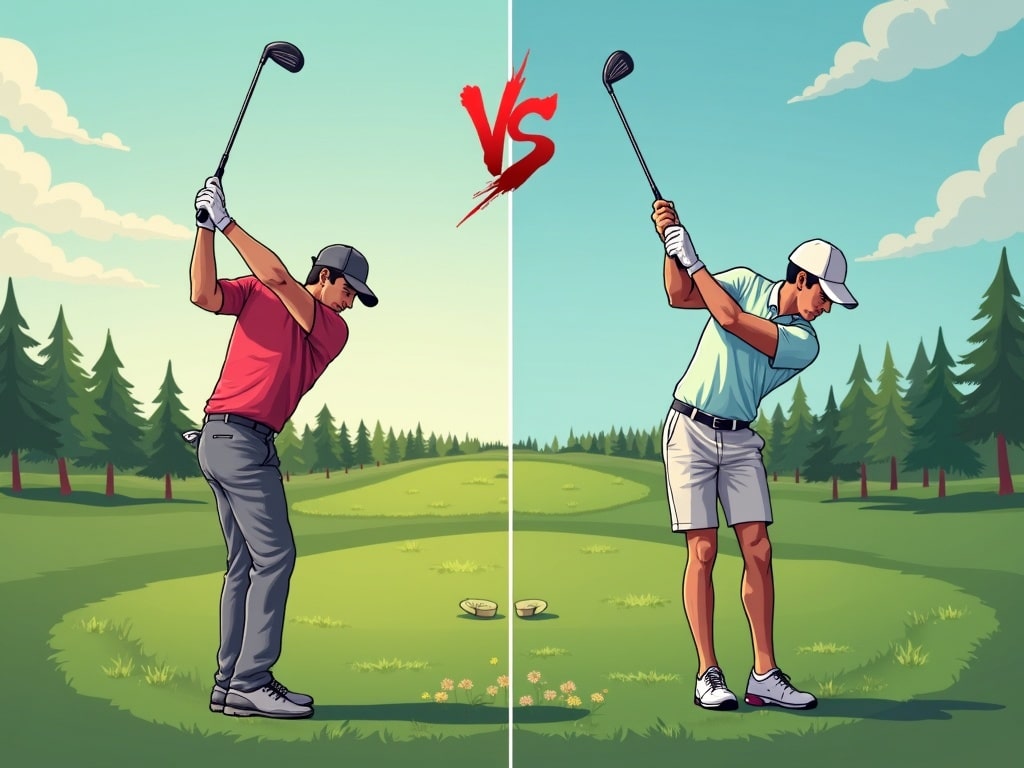
Head-to-Head Comparison: 4 Iron vs. 4 Hybrid
Let's distill the key differences between these two clubs in a direct comparison:
| Feature | 4 Iron | 4 Hybrid |
|---|---|---|
| Forgiveness | Lower | Higher |
| Launch Angle | Lower | Higher |
| Spin Rate | Higher | Lower |
| Ball Flight | Penetrating | Soaring |
| Distance (Potential) | Slightly Less | Slightly More (for some) |
| Workability | Higher | Lower |
| Ideal Swing | Descending Blow | Sweeping Motion |
| Lie Versatility | Good from Tight Lies | Good from Various Lies |
Factors to Consider When Choosing
The best club for you depends on a range of interconnected factors:
Swing Style
Are you a digger or a sweeper? This is paramount. If you take a divot after the ball, the iron might be preferable. If you pick the ball cleanly off the turf without a pronounced divot, the hybrid will likely be more consistent.
Course Conditions
The typical conditions you play in heavily influence your selection. Windy courses favor the lower trajectory of the iron. Softer courses benefit from the hybrid's wider sole. On links-style courses with firm fairways, the 4-iron's precision is highly valuable.
Personal Preference and Confidence
Ultimately, the club you feel most confident with is the one you'll likely perform best with. Some players simply prefer the feel and feedback of an iron, while others find the hybrid more comfortable and confidence-inspiring.
Skill Level
Generally, higher-handicap golfers tend to benefit more from the increased forgiveness and ease of use of the hybrid. Lower-handicap players may prefer the control and workability offered by the 4 iron.
Experimentation is Key
The best way to determine which club is right for you is to test them both extensively. Head to a driving range or, even better, play a round of golf alternating between the 4 iron and 4 hybrid in different situations. Track your results – distance, accuracy, and consistency – to identify which club provides the best performance for your game. Consider a club fitting with a qualified professional to get personalized recommendations based on your specific swing characteristics.
Beyond the 4 Iron and 4 Hybrid: Other Options
While the 4 iron and 4 hybrid are common choices, remember they are not the only long-game solutions. Depending on your needs, consider these alternatives:
- Fairway Woods: These offer maximum distance and forgiveness but can be harder to control than hybrids.
- Driving Irons: Designed for tee shots, these irons offer a low, penetrating flight with exceptional accuracy.
- Utility Irons: These are a blend of iron and hybrid characteristics, offering a balance of distance and control.
Final Verdict: A Matter of Personal Fit
There’s no definitive better club between a 4 iron and a 4 hybrid. The ideal choice is deeply personal and depends entirely on your swing style, playing conditions, and individual preferences. By understanding the nuances of each club and carefully considering the factors outlined above, you can make an informed decision that optimizes your long game and helps you achieve your golfing goals. Spend time experimenting, get fitted if possible, and choose the tool that empowers you to play your best.