

How to Minimize Penalty Strokes and Lower Your Golf Score
That dreaded PLUNK! sound. Every golfer knows it. The sickening thud of a ball finding water, the agonizing realization it's OB, or the frustrating search for a lost ball in the woods. Penalty strokes are scorecard killers. They inflate your score, shatter your confidence, and can turn a potentially great round into a complete disaster. But penalty strokes aren't inevitable. With smart course management, strategic decision-making, and a little disciplined self-awareness, you can dramatically reduce them, leading to lower scores and more enjoyable rounds. So, let’s dive into the art of minimizing those dreaded penalty strokes.
Understanding the Common Culprits Behind Penalty Strokes
Before we can tackle the solution, we need to identify the problem. Where are your penalty strokes typically coming from? Common causes include:
- Water Hazards: Lakes, ponds, streams – these aquatic obstacles are stroke-magnets for golfers of all skill levels.
- Out of Bounds (OB): Marked by white stakes or lines, OB areas are instant penalty zones.
- Lost Balls: The clock is ticking! After three minutes of searching, a lost ball results in a penalty stroke and a walk of shame back to the tee (or approximate spot).
- Unplayable Lies: Sometimes, you’re in a situation where advancing the ball is simply impossible. Declaring an unplayable lie comes with a one-stroke penalty.
- Improper Procedures: Not knowing the rules can cost you. Things like grounding your club in a hazard (generally prohibited), or moving a loose impediment in a bunker can trigger penalties.
Keeping track of where your penalty strokes occur for a few rounds can be incredibly insightful. Knowing your weaknesses will help you target your improvement efforts.
Strategic Course Management: Your First Line of Defense
Course management isn't just for pros. It's about making smart decisions based on your abilities and the layout of the hole. This is arguably the most important factor in how to minimize penalty strokes.
Assessing the Risk-Reward Ratio
Every shot presents a choice. Do you go for the hero shot over the water, or lay up to a safer spot? The key is to realistically evaluate the risk versus the potential reward. Ask yourself these questions:
- What's the probability of successfully pulling off the aggressive shot? Be honest with yourself!
- What's the potential downside if the shot goes wrong (e.g., water hazard, OB)?
- What's the alternative, safer play, and how much distance would you sacrifice?
Sometimes, the smart play is the conservative one. A layup to the middle of the fairway might add an extra shot to the hole, but it's far better than rinsing two balls in the water.
Playing to Your Strengths (and Avoiding Your Weaknesses)
Do you fade the ball naturally? Then favor the left side of the fairway to bring the ball back to the center. Struggle with long irons? Lay up to your favorite wedge distance. Tailor your strategy to your strengths and away from your weaknesses to minimize the chance of a bad shot leading to a penalty.
Visualizing the Hole and Planning Your Shots
Before you even step onto the tee box, take a moment to visualize the entire hole. Identify potential hazards, ideal landing areas, and the best angle of approach to the green. Having a clear plan will help you make better decisions under pressure.
Understanding Yardages and Club Selection
Accurate yardages are crucial for effective course management. Use a rangefinder or GPS app to get precise distances to hazards, layup areas, and the green. Once you have the yardage, select the club that gives you the best chance of hitting your target, taking into account wind, elevation, and lie.
Shot Execution: Minimizing Errors That Lead to Penalties
Even the best course management strategy is useless if you can't execute your shots. While perfect shots are rare, focusing on consistency and controlled aggression can significantly reduce errors.
Swinging Within Yourself
Trying to crush the ball is a recipe for disaster. Over-swinging often leads to erratic shots and increased risk of penalties. Instead, focus on a smooth, controlled swing that stays within your capabilities. Prioritize accuracy over distance, especially when hazards are in play.
Maintaining Balance and Tempo
Good balance and tempo are essential for consistent ball striking. A balanced swing allows you to maintain control throughout the motion, while a smooth tempo prevents you from rushing and making mistakes. Practice balance drills and focus on maintaining a consistent rhythm in your swing.
Controlling Your Emotions
Golf is a mental game, and emotions can easily derail your performance. If you hit a bad shot, resist the urge to get angry or frustrated. Take a deep breath, refocus your mind, and commit to the next shot. Try to avoid making rash decisions following a poor shot. A calm and collected mindset will lead to better decision-making and fewer penalty strokes.
Pre-Shot Routine
Develop a consistent pre-shot routine and stick to it. This routine should include things like visualizing the shot, taking practice swings, and aligning your body properly. A well-defined routine helps you stay focused and relaxed, reducing the chances of making a mental error.
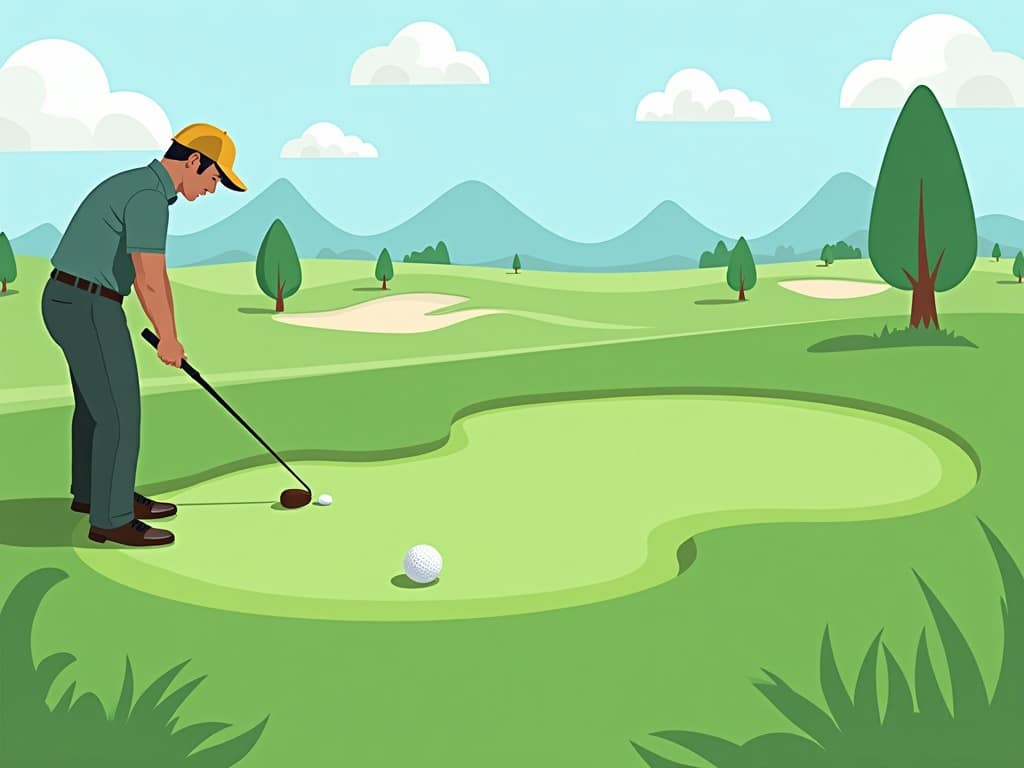
Navigating Trouble: Smart Choices When Things Go Wrong
Even with the best planning and execution, you'll inevitably find yourself in trouble. The key is to minimize the damage and avoid compounding your mistakes.
Knowing Your Options
Understanding the rules regarding relief from hazards, unplayable lies, and other situations is crucial. Take the time to familiarize yourself with the rule book, or use a golf rules app on your phone. Knowing your options will allow you to make the best decision in any given situation.
Taking Your Medicine
Sometimes, the best option is to take your medicine and accept the penalty. Trying to pull off a miraculous shot from an impossible situation often leads to further disaster. Don't be afraid to drop the ball, take the penalty stroke, and move on.
Avoiding the Hero Shot
The hero shot – attempting a risky shot with a low probability of success – is often a recipe for disaster. While it might seem tempting to try and save par, the odds are usually stacked against you. Unless the risk is minimal, it's usually better to play conservatively and avoid adding more strokes to your score.
Focusing on Recovery
When you find yourself in trouble, shift your focus from trying to make par to simply recovering the ball back into play. Aim for the safest possible landing area, even if it means sacrificing distance or a better angle to the green. Once the ball is back in play, you can then focus on making a good score on the rest of the hole.
Practicing Smart: Drills to Reduce Penalty Strokes
Reducing penalty strokes isn't just about on-course strategy; it's also about improving your skills and managing your game on the practice range.
Accuracy-Focused Range Sessions
Instead of mindlessly bashing balls, focus on accuracy during your practice sessions. Set up targets at various distances and try to hit them consistently. Work on controlling your distance and direction with different clubs.
Trouble Shot Practice
Don't just practice hitting perfect shots from perfect lies. Spend some time practicing from uneven lies, fairway bunkers, and rough. Learn how to adjust your stance and swing to compensate for these challenging situations.
Short Game Mastery
A strong short game can save you a lot of strokes around the greens. Practice your chipping, pitching, and putting to improve your ability to get up and down, even when you miss the green.
Mental Game Exercises
Work on your mental game by simulating pressure situations during your practice rounds. Imagine you're playing in a tournament, and challenge yourself to stay calm and focused, even when you make a mistake.
The Final Result: Lower Scores and More Enjoyable Rounds
Minimizing penalty strokes is a continuous process of learning, adapting, and refining your game. By understanding the common causes of penalties, implementing smart course management strategies, improving your shot execution, and making smart decisions in trouble, you can significantly reduce your penalty strokes and lower your scores. Remember, golf is a game of minimizing mistakes, not hitting perfect shots. Embrace the challenge, stay patient, and enjoy the journey to becoming a more strategic and consistent golfer.